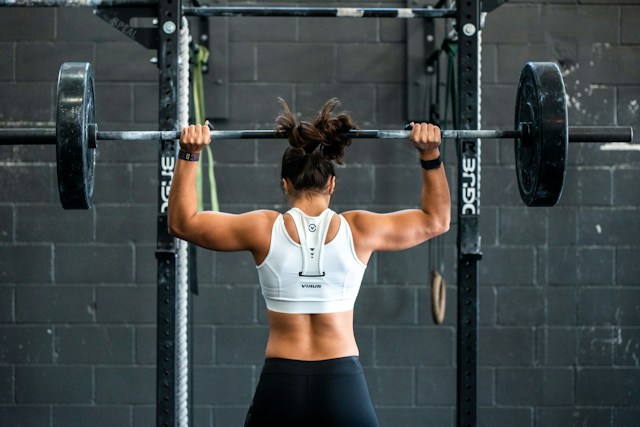

Losing weight at home does not have to mean spending hours doing cardio or buying expensive gym equipment. Strength training for weight loss at home can be an effective way to build muscle, improve fitness, and support healthy fat loss without ever stepping inside a gym.
Strength training involves working your muscles against resistance. That resistance can come from dumbbells, resistance bands, household objects, or simply your own body weight.
While strength training burns calories during exercise, its biggest advantage is that it helps preserve and build lean muscle. This is especially important when you are trying to lose weight because dieting without resistance exercise can lead to the loss of both fat and muscle.
The good news is that beginners do not need a complicated workout routine. A small space, comfortable clothes, and a consistent schedule are enough to get started.
Here are 11 effective ways to use strength training for weight loss at home.
1. Start With Bodyweight Exercises
You do not need dumbbells or a home gym to begin strength training. Your own body can provide enough resistance for many effective exercises.
Some beginner-friendly bodyweight exercises include:
- Squats
- Wall push-ups
- Incline push-ups
- Lunges
- Glute bridges
- Step-ups
- Planks
- Bird dogs
For example, squats train several major muscles in your lower body, while push-ups strengthen your chest, shoulders, and arms.
If regular push-ups are too difficult, start with wall push-ups or place your hands on a sturdy elevated surface.
The objective is not to perform the hardest variation immediately. Choose an exercise you can perform with good technique and gradually make it more challenging as you become stronger.
This progressive approach makes home strength training suitable even for complete beginners.
2. Focus on Compound Exercises
If weight loss is your goal, make compound exercises an important part of your routine.
Compound movements work multiple muscle groups at the same time. Because more muscles are involved, they can make your workout more efficient.
Examples include:
- Squats
- Lunges
- Push-ups
- Rows
- Deadlift variations
- Step-ups
A squat, for example, works your quadriceps, hamstrings, glutes, and core. Compare that with an isolation exercise such as a biceps curl, which primarily targets a smaller group of muscles.
Isolation exercises can still be useful, but compound movements allow you to train more of your body within a shorter workout.
For home workouts, try building your routine around four or five major movements and adding smaller exercises afterward if you have time.
3. Train Your Entire Body
It can be tempting to concentrate on areas where you want to lose fat, such as your stomach, thighs, or arms.
However, you cannot reliably choose where your body loses fat first simply by exercising that area.
Instead, create a full-body strength-training routine.
A balanced workout should include movements for your:
- Legs
- Glutes
- Back
- Chest
- Shoulders
- Arms
- Core
For example, a simple session could contain squats, glute bridges, incline push-ups, resistance-band rows, shoulder presses, and planks.
Training your whole body also helps develop balanced strength instead of repeatedly working only one or two muscle groups.
For many beginners, two or three full-body sessions per week are a practical starting point.
4. Use Progressive Overload
One of the most important principles of strength training is progressive overload.
Your muscles adapt to exercise. If you continue doing exactly the same workout with the same resistance and repetitions for months, your progress may eventually slow.
Progressive overload means gradually making your training more challenging.
You might:
- Add repetitions
- Increase resistance
- Add another set
- Use a harder exercise variation
- Improve your range of motion
- Perform repetitions with better control
Suppose you begin with two sets of eight squats. Over time, you may progress to two sets of 12, then three sets, and eventually weighted squats.
You do not need to increase the difficulty every workout. Progress gradually while maintaining good form.
Keeping a simple workout journal can help you see whether you are actually becoming stronger.
5. Add Dumbbells or Resistance Bands
Bodyweight exercises are excellent, but eventually you may want additional resistance.
You still do not need an expensive collection of gym equipment.
A pair of adjustable dumbbells or several resistance bands can dramatically increase the number of exercises you can perform at home.
Dumbbell exercises can include:
- Goblet squats
- Romanian deadlifts
- Bent-over rows
- Shoulder presses
- Chest presses
- Biceps curls
- Triceps extensions
Resistance bands are particularly convenient because they are inexpensive, portable, and easy to store.
If you are a beginner, start with manageable resistance and learn the movement correctly before increasing the weight.
The last few repetitions of a set should generally feel challenging, but you should still be able to maintain proper technique.
6. Keep Your Workouts Short but Consistent
You do not necessarily need a one-hour workout every day to see progress.
A well-planned 20–40 minute strength workout performed consistently can be much more useful than an exhausting routine that you abandon after two weeks.
A beginner might start with three sessions per week.
For example:
Monday: Full-body strength training
Wednesday: Full-body strength training
Friday: Full-body strength training
On the other days, you can walk, stretch, perform light activity, or rest.
Consistency matters because improvements in strength and body composition happen gradually.
Choose a schedule that realistically fits your lifestyle. If 30 minutes feels overwhelming, begin with 15–20 minutes and build from there.
A sustainable routine is usually more valuable than an aggressive plan you cannot maintain.
7. Combine Strength Training With Walking or Cardio
You do not have to choose between strength training and cardio.
They can complement each other.
Strength training helps preserve and develop muscle, while activities such as walking, cycling, or aerobic workouts increase your overall physical activity and energy expenditure.
For example, you could perform strength training three days per week and walk for 30 minutes on several other days.
You can also take short walks throughout your day.
If you enjoy higher-intensity cardio, it can be included too, but beginners should avoid adding so much exercise that they are constantly exhausted.
Your training program should leave enough room for recovery.
For many people trying to lose weight at home, a combination of regular walking and strength training is simple, inexpensive, and sustainable.
8. Eat Enough Protein
Exercise is only one part of a successful weight-loss strategy.
Nutrition matters too.
Protein is particularly important when you are strength training because it provides amino acids that your body uses to maintain and repair muscle tissue.
Protein-rich foods include:
- Eggs
- Chicken
- Fish
- Lean meat
- Milk
- Greek yogurt
- Cottage cheese
- Lentils
- Beans
- Chickpeas
- Tofu
Try to include a source of protein in your main meals rather than consuming most of your protein at one time.
Remember that adding large amounts of protein does not automatically cause weight loss. Your overall calorie intake still matters.
The goal is to combine adequate protein with a balanced diet containing vegetables, fruits, whole grains, healthy fats, and minimally processed foods.
9. Create a Moderate Calorie Deficit
Strength training supports weight loss, but losing body fat generally requires consuming fewer calories than your body uses over time.
This is known as a calorie deficit.
However, an extremely restrictive diet is not necessary and can make training harder.
Very low-calorie diets may leave you tired, hungry, and less able to exercise effectively. They may also make it more difficult to preserve muscle while losing weight.
Instead, aim for gradual, sustainable changes.
You might reduce calories by:
- Limiting sugary drinks
- Reducing frequent fried foods
- Watching portion sizes
- Eating more vegetables
- Choosing filling protein-rich meals
- Reducing mindless snacking
- Planning meals in advance
Strength training becomes particularly valuable during a calorie deficit because it gives your body a reason to retain muscle.
Your goal should not simply be to make the number on the scale fall as quickly as possible. Improving body composition means reducing excess body fat while maintaining as much lean tissue as possible.
10. Prioritize Recovery and Sleep
More exercise is not always better.
Your muscles need time to recover from resistance training. Training intensely every single day can leave you sore and may reduce the quality of your workouts.
Allow adequate recovery between sessions that train the same muscle groups.
Sleep is equally important.
Poor sleep can affect energy levels, appetite, workout performance, and recovery. Most adults should aim for roughly seven to nine hours of sleep per night, although individual needs vary.
You can improve recovery by staying hydrated, eating nutritious meals, getting enough protein, taking rest days, and maintaining a consistent sleep schedule.
If your muscles are mildly sore after beginning strength training, light movement may feel helpful. Sharp or persistent pain, however, should not be ignored.
11. Track More Than Your Body Weight
The bathroom scale is useful, but it does not tell the entire story.
Strength training can change your body composition, meaning your measurements, strength, or appearance may improve even when your scale weight changes slowly.
Consider tracking:
- Body weight
- Waist measurement
- Hip measurement
- Workout repetitions
- Resistance used
- Progress photos
- Energy levels
- How your clothes fit
For example, being able to perform 15 controlled squats when you previously struggled with eight is genuine progress.
Avoid becoming discouraged by normal daily weight fluctuations. Body weight can change because of water, food intake, sodium, hormones, and other factors.
Look at your progress over several weeks rather than judging your results based on a single day.
Beginner Strength Training Workout for Weight Loss at Home
Here is a simple routine you can use to put these 11 principles into practice.
Start with a short warm-up, such as marching in place and gentle mobility exercises.
Then perform:
Squats: 2–3 sets of 8–12 repetitions
Wall or incline push-ups: 2–3 sets of 8–12 repetitions
Glute bridges: 2–3 sets of 10–15 repetitions
Dumbbell or resistance-band rows: 2–3 sets of 8–12 repetitions
Reverse lunges or supported split squats: 2 sets of 8–10 repetitions per leg
Shoulder presses: 2 sets of 8–12 repetitions
Plank: 2–3 rounds of 15–30 seconds
Rest between sets as needed.
Beginners can perform this workout two or three times per week, leaving recovery time between sessions.
Do not worry if you cannot complete every repetition initially. Start at your current fitness level and progress gradually.
How Long Does Strength Training Take to Help With Weight Loss?
There is no universal timeline.
Your results depend on your starting weight, diet, activity level, workout consistency, sleep, genetics, and other individual factors.
Instead of expecting dramatic changes within a few days, think in terms of months of consistent habits.
You may notice improvements in strength before major visual changes occur. For example, exercises may become easier, you may be able to lift heavier weights, or everyday activities may require less effort.
Fat loss tends to be gradual.
This is another reason to measure progress using several indicators rather than relying exclusively on the scale.
Common Mistakes to Avoid
When starting strength training at home, avoid trying to progress too quickly.
Using resistance that is too heavy can compromise your form. Similarly, performing dozens of exercises is unnecessary for a beginner.
Another common mistake is treating exercise as permission to ignore nutrition. A challenging workout does not automatically compensate for consistently consuming more calories than your body needs.
Finally, do not compare your progress with people on social media. Fitness levels, genetics, lifestyles, training histories, and starting points vary enormously.
Focus on improving your own performance gradually.
Final Thoughts
Strength training for weight loss at home does not require expensive equipment, complicated workouts, or hours of daily exercise.
Start with basic bodyweight exercises, prioritize compound movements, train your whole body, and gradually increase the challenge as you become stronger. Adding dumbbells or resistance bands can provide more options, but they are not essential for getting started.
Combine your strength routine with regular daily movement, balanced nutrition, sufficient protein, a moderate calorie deficit, good sleep, and adequate recovery.
Most importantly, remain consistent.
A workout program you can follow for months is far more valuable than an extreme routine you can tolerate for only a few days. Focus not only on losing weight but also on becoming stronger, improving your fitness, and developing habits you can maintain long term.