
Introduction
Artificial Intelligence (AI) has become one of the most discussed technologies of our time. From virtual assistants and recommendation systems to self-driving cars and advanced language models, AI is transforming the way we live and work. As technology continues to advance, many people are asking an important question: will artificial intelligence replace humans, or will it empower them?
The answer is not as simple as a yes or no. While AI has the potential to automate certain tasks, it also creates new opportunities, enhances human capabilities, and helps solve complex problems. Understanding the relationship between humans and AI is essential for preparing for the future.
Understanding Artificial Intelligence
‘Artificial intelligence’ refers to computer systems that can perform tasks that normally require human intelligence. These tasks include learning, problem-solving, decision-making, language understanding, and pattern recognition.
AI is already part of our daily lives. When you use a navigation app, receive personalised recommendations on streaming platforms, or interact with a chatbot, you are benefiting from AI technology.
However, AI does not think, feel, or understand the world in the same way humans do. It processes data, identifies patterns, and makes predictions based on the information it has been trained on.
Why People Fear AI Will Replace Humans
Many concerns about AI stem from its ability to perform tasks faster and more efficiently than humans. Throughout history, technological advancements have changed the nature of work. The Industrial Revolution replaced many manual jobs but also created entirely new industries.
Today, AI is automating tasks in areas such as the following:
- Data entry
- Customer support
- Manufacturing
- Content analysis
- Basic accounting
- Inventory management
As a result, some jobs may become less dependent on human labour. This creates understandable concerns about unemployment and economic disruption.
For example, businesses can now use AI-powered systems to answer common customer questions, reducing the need for large support teams. Similarly, automation in factories can perform repetitive tasks with high accuracy and speed.
These developments have led some people to believe that AI will eventually replace humans entirely.
Why Humans Remain Irreplaceable
Despite rapid technological progress, there are several qualities that make humans unique.
Creativity
AI can generate text, images, music, and ideas based on existing data. However, genuine creativity often comes from personal experiences, emotions, imagination, and cultural understanding.
Many groundbreaking inventions, artistic masterpieces, and social movements were driven by human vision and creativity rather than pattern recognition.
Emotional Intelligence
Humans can understand emotions, build relationships, show empathy, and provide emotional support. These qualities are essential in professions such as the following:
- Teaching
- Counseling
- Healthcare
- Leadership
- Social work
While AI can simulate conversations, it does not genuinely experience emotions or understand human feelings.
Ethical Judgment
Many decisions involve values, morality, and social responsibility. Humans must often consider fairness, compassion, and long-term consequences.
AI can assist with analysis, but humans are responsible for making ethical decisions and ensuring technology is used responsibly.
Adaptability
People can adapt to unexpected situations using intuition, experience, and common sense. AI systems typically perform best within the specific tasks they are trained to handle.
How AI Can Empower Humans
Rather than replacing humans, AI is often most effective when it works alongside them.
Improving Productivity
AI can automate repetitive tasks, allowing people to focus on higher-value work. This increases efficiency and enables workers to spend more time on creativity, strategy, and innovation.
For example, doctors can use AI to analyse medical images, helping them identify potential issues more quickly while still making the final diagnosis themselves.
Expanding Access to Knowledge
AI-powered tools can help students learn, assist researchers in analysing large amounts of data, and make information more accessible to people around the world.
Language translation systems and educational platforms are already breaking barriers and creating new learning opportunities.
Supporting People with Disabilities
One of the most inspiring applications of AI is its ability to improve accessibility.
AI-powered technologies can assist people with disabilities through:
- Voice recognition systems
- Screen readers
- Real-time translation tools
- Smart mobility solutions
- Communication assistance devices
These innovations help individuals live more independently and participate more fully in society.
Driving Innovation
Many scientific and technological breakthroughs are being accelerated by AI. Researchers use AI to discover patterns in data, develop new medicines, and address complex challenges in fields such as healthcare, climate science, and engineering.
The Future of Work in the Age of AI
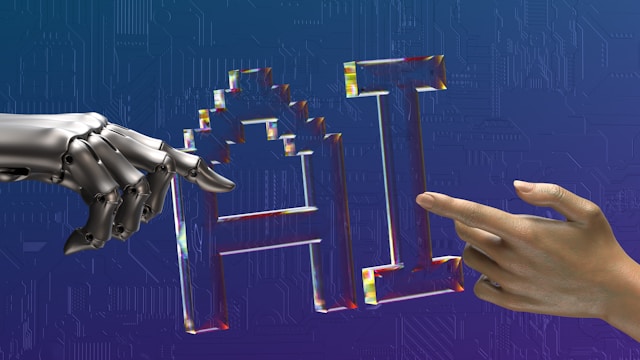
The future is unlikely to be a competition between humans and machines. Instead, it will be a partnership.
As AI handles routine and repetitive tasks, demand for uniquely human skills is expected to grow. These skills include:
- Critical thinking
- Creativity
- Leadership
- Communication
- Emotional intelligence
- Problem-solving
Workers who learn how to use AI effectively may gain a significant advantage in the job market.
Rather than fearing technology, individuals can focus on continuous learning and skill development to remain valuable in an evolving world.
Challenges We Must Address
Although AI offers tremendous benefits, it also raises important concerns.
Some challenges include:
- Data privacy
- Algorithmic bias
- Job displacement
- Security risks
- Ethical use of technology
Governments, businesses, educators, and technology developers must work together to ensure AI is developed and used responsibly.
Responsible innovation requires transparency, accountability, and a commitment to serving humanity.
Conclusion
Artificial intelligence is transforming our world, but it is unlikely to replace the qualities that make us human. Creativity, empathy, ethical judgement, and meaningful relationships remain uniquely human strengths.
The real question is not whether AI will replace humans. The more important question is how humans will use AI to create a better future.
When used responsibly, AI can become a powerful tool that enhances human potential, improves lives, and helps solve some of the world’s greatest challenges.
The future belongs not to humans alone or machines alone, but to the collaboration between human intelligence and artificial intelligence. Those who learn to work alongside technology will be best positioned to thrive in the years ahead.