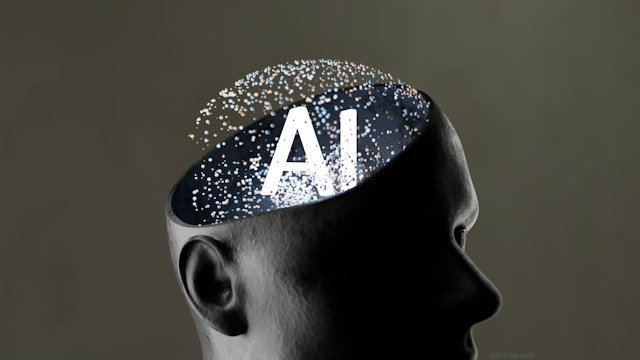

Artificial intelligence is no longer a futuristic concept limited to science fiction movies or advanced research laboratories. Today, it has become an important part of our daily routines, influencing how we communicate, shop, learn, work, and make decisions.
From unlocking smartphones using facial recognition to receiving personalized recommendations on Netflix, artificial intelligence in everyday life is making many activities faster, easier, and more convenient.
Interestingly, millions of people interact with AI-powered technologies every day without even realizing it.
But how exactly does artificial intelligence affect our lives? Is it making us more productive, or are we becoming increasingly dependent on technology?
In this article, we will explore 12 practical examples of artificial intelligence in everyday life, its benefits, potential risks, and how it may shape our future.
What Is Artificial Intelligence?
Artificial intelligence, commonly known as AI, refers to computer systems designed to perform tasks that typically require human intelligence.
These tasks include learning from data, recognizing patterns, understanding language, solving problems, and making predictions.
Unlike traditional software that follows only predefined instructions, many AI systems can identify patterns in large amounts of information and use them to generate responses or recommendations.
For example, when an email application automatically identifies spam messages, it may use machine learning to recognize suspicious patterns.
Similarly, when a navigation application predicts traffic congestion, AI can help analyze historical and current traffic information.
AI is not necessarily a robot that looks or behaves like a human. In fact, most artificial intelligence operates quietly behind the applications and services we use.
12 Examples of Artificial Intelligence in Everyday Life
1. Smartphones and Virtual Assistants
Smartphones are among the most common examples of artificial intelligence in everyday life.
Modern smartphones use AI for facial recognition, camera enhancement, voice recognition, and predictive typing.
Virtual assistants such as Siri and Google Assistant can help users perform everyday tasks through voice commands.
For example, you can ask your phone to:
- Set an alarm or reminder.
- Check the weather forecast.
- Send a text message.
- Search for information.
- Provide directions to a destination.
These features save time and make technology more accessible, especially for individuals who find typing or navigating complicated menus difficult.
2. Personalized Recommendations on Streaming Platforms
Have you ever wondered how Netflix or YouTube seems to understand what you enjoy watching?
AI-powered recommendation systems analyze information such as viewing history, interactions, and content preferences to suggest relevant videos, movies, or television shows.
For instance, someone who frequently watches motivational documentaries may receive recommendations for similar content.
These systems can improve entertainment experiences by helping users discover interesting material.
However, excessive personalization may also limit exposure to different viewpoints or encourage prolonged screen time.
3. Artificial Intelligence in Online Shopping
Online shopping platforms use artificial intelligence to improve customer experiences.
When you browse an online store, recommendation systems may suggest products based on your searches, purchases, and browsing behavior.
AI can also support inventory forecasting, customer service chatbots, and fraud detection.
For example, if someone frequently searches for fitness equipment, an online store might recommend exercise mats, resistance bands, or workout clothing.
For businesses, these systems can improve product discovery and operational efficiency.
For consumers, they make shopping more convenient, although personalized advertising also raises important privacy concerns.
4. AI in Healthcare and Medical Services
Healthcare is one of the most promising areas where artificial intelligence is making a difference.
AI-powered systems can help medical professionals analyze medical images, identify patterns in patient information, and support clinical decisions.
Some applications also assist with appointment scheduling, hospital administration, and health monitoring.
For example, certain AI tools can help radiologists identify suspicious findings in medical scans for further examination.
Wearable devices may also use algorithms to monitor heart rate, activity levels, and sleep patterns.
Nevertheless, AI should support healthcare professionals rather than replace qualified medical judgment. Its recommendations can be incorrect and must be evaluated appropriately.
5. Smart Homes and Home Automation
Artificial intelligence is making homes more convenient through smart devices.
Smart thermostats can learn household temperature preferences, while connected lighting systems can adjust according to schedules or occupancy.
Some security cameras use AI to distinguish between people, animals, and other movements.
Robot vacuum cleaners may use intelligent navigation systems to map rooms and avoid obstacles.
These technologies can help households save time, manage energy consumption, and improve convenience.
However, connected home devices also require careful attention to cybersecurity and personal privacy.
6. AI in Education and Online Learning
Artificial intelligence is transforming how students learn and how educators prepare learning materials.
AI-powered educational tools can provide personalized practice exercises, explain difficult concepts, and offer feedback on writing.
For example, a student struggling with mathematics can use an AI tutor to understand a problem through step-by-step explanations.
Language-learning applications may use speech recognition to help learners improve pronunciation.
Teachers can also use AI tools to brainstorm classroom activities or develop lesson outlines.
However, students should avoid relying entirely on AI-generated answers. Independent thinking, reading, and problem-solving remain essential for meaningful education.
7. Navigation and Traffic Management
Navigation applications such as Google Maps use intelligent algorithms to help drivers select suitable routes.
By analyzing traffic conditions, historical travel patterns, and road information, these systems can estimate travel times and suggest alternative routes.
For example, when heavy traffic develops on a major road, a navigation application may recommend another route.
AI can also contribute to traffic forecasting and transportation planning.
This makes everyday travel more efficient, although estimated arrival times and suggested routes are not always accurate.
8. Artificial Intelligence in Banking and Finance
Banks and financial institutions increasingly use artificial intelligence to detect suspicious transactions, assess risks, and improve customer support.
Fraud detection systems can identify unusual transaction patterns that may require additional verification.
For example, if a bank account suddenly shows transactions that differ significantly from normal activity, automated systems may flag them for investigation.
AI-powered chatbots can also answer routine customer questions about banking services.
Although these technologies improve efficiency, financial institutions must ensure that automated decisions are fair, secure, and subject to appropriate oversight.
9. AI in Social Media
Social media platforms use artificial intelligence to personalize news feeds, recommend content, and identify potentially harmful material.
Platforms such as Instagram, Facebook, and TikTok use recommendation systems to determine which posts or videos users may find interesting.
AI also helps with automatic captions, image recognition, and certain content moderation tasks.
For content creators, AI-powered tools can assist with video editing, caption generation, and audience analysis.
However, social media algorithms may reinforce existing preferences, amplify misleading information, or encourage excessive scrolling.
Users should remain mindful of how recommendation systems influence their attention and opinions.
10. AI in Writing and Communication
Artificial intelligence has introduced significant changes to professional and personal communication.
AI writing assistants can help people brainstorm ideas, correct grammar, summarize documents, translate languages, and improve sentence clarity.
Tools such as ChatGPT and Grammarly offer different forms of writing assistance.
For example, a small business owner might use AI to prepare a first draft of a customer email.
A student might use it to understand grammar mistakes, while a professional writer could use it to organize research questions.
Nevertheless, creativity, personal experience, originality, and fact-checking remain important.
AI-generated information can contain errors, and writers should verify claims before publishing their work.
11. AI in Customer Service
Many companies now use AI-powered chatbots to respond to common customer questions.
These systems can provide information about orders, return policies, account services, and frequently asked questions.
For example, an online retailer’s chatbot may help customers locate an order or understand delivery options.
Automated customer support can reduce waiting times and provide assistance outside normal business hours.
However, complicated complaints, emotional situations, and unusual problems may still require human customer service representatives.
The most effective approach often combines automation with accessible human support.
12. Artificial Intelligence in Workplace Productivity
Artificial intelligence is changing how people manage professional responsibilities.
AI-powered tools can assist with scheduling, document summaries, data analysis, meeting notes, and repetitive administrative tasks.
For example, a marketing professional might use AI to analyze campaign performance, while an office worker could use it to summarize a lengthy report.
Small businesses can also use AI tools to organize customer information and streamline routine operations.
These applications may allow employees to spend more time on strategic, creative, and interpersonal responsibilities.
However, workplace adoption also requires employee training, data protection, and careful evaluation of automated results.
Benefits of Artificial Intelligence in Everyday Life
Artificial intelligence offers several advantages when implemented responsibly.
Time savings: AI can automate repetitive tasks, allowing people to focus on activities that require human attention.
Improved accessibility: Speech recognition, automatic captions, and assistive technologies can help people with disabilities interact with digital services.
Personalized experiences: AI can adapt recommendations and learning materials to individual preferences or needs.
Better information processing: Intelligent systems can analyze large datasets and identify patterns that would be difficult to detect manually.
Greater convenience: From navigation to smart home management, AI can simplify many everyday activities.
These benefits explain why artificial intelligence continues to become more integrated into modern society.
Challenges and Risks of Artificial Intelligence
Despite its advantages, artificial intelligence presents several important challenges.
Privacy and Data Security
Many AI applications depend on collecting and processing user information.
Without appropriate safeguards, personal data may be exposed, misused, or shared in ways users do not expect.
Job Displacement
AI can automate certain workplace tasks, potentially changing employment opportunities.
While new roles may emerge, some workers will need additional training to adapt to technological developments.
Misinformation and Inaccurate Results
AI systems can generate convincing but incorrect information.
Deepfake videos, misleading images, and fabricated content can also make it more difficult to distinguish authentic information from manipulation.
Algorithmic Bias
AI systems trained on incomplete or biased datasets may produce unfair outcomes.
This is particularly concerning in areas such as recruitment, lending, and healthcare.
Excessive Dependence
Relying too heavily on AI may reduce opportunities to practice independent thinking, creativity, and problem-solving.
Therefore, users should treat AI as a helpful tool rather than an unquestionable authority.
How to Use Artificial Intelligence Responsibly
Using AI responsibly requires awareness and good judgment.
People should verify important information, protect sensitive personal data, and understand the limitations of automated systems.
Students should use AI to support learning rather than replace it.
Professionals should review AI-generated work before sharing it with colleagues or customers.
Similarly, individuals should avoid entering confidential financial, medical, or personal information into unfamiliar AI applications.
Most importantly, human responsibility should remain central to decisions that significantly affect people’s lives.
The Future of Artificial Intelligence in Everyday Life
Artificial intelligence is likely to become more deeply integrated into everyday technologies.
Future developments may bring more capable personal assistants, improved accessibility tools, smarter transportation systems, and increasingly personalized educational experiences.
Healthcare professionals may benefit from better diagnostic support, while businesses may use intelligent systems to improve operations.
However, technological progress alone does not guarantee positive outcomes.
Governments, technology companies, educators, and individuals will need to address concerns involving privacy, fairness, transparency, and employment.
The future of AI should not simply focus on making machines more intelligent. It should also focus on ensuring that technology benefits humanity.
Frequently Asked Questions
What are common examples of artificial intelligence in everyday life?
Common examples include smartphone voice assistants, online shopping recommendations, navigation applications, email spam filters, social media algorithms, and AI-powered customer service chatbots.
How does artificial intelligence make everyday life easier?
Artificial intelligence can save time, automate repetitive tasks, personalize digital experiences, improve accessibility, and help people process information more efficiently.
Is artificial intelligence safe to use every day?
Many AI applications can be used safely, but risks depend on the technology and how it handles information. Users should protect their privacy, verify important outputs, and avoid relying entirely on automated decisions.
Will artificial intelligence replace human jobs?
AI may replace or transform certain tasks and occupations while creating demand for new skills and roles. Its employment effects will vary across industries and depend on how organizations adopt the technology.
Can artificial intelligence replace human intelligence?
AI can perform many specialized tasks efficiently, but it does not fully reproduce human judgment, lived experience, empathy, or moral responsibility.
Conclusion
Artificial intelligence in everyday life is already transforming how people communicate, learn, shop, travel, work, and access essential services.
From smartphone assistants to healthcare technologies, AI offers opportunities to improve convenience, efficiency, and accessibility.
At the same time, privacy concerns, misinformation, algorithmic bias, and workplace disruption remind us that technology must be used thoughtfully.
The goal should not be to allow artificial intelligence to control every aspect of human life. Instead, we should use it to support human abilities, strengthen decision-making, and create opportunities for progress.
Artificial intelligence may shape the future, but human wisdom, creativity, and responsibility must guide how that future develops.